
What That “A Development Is Proposed” Sign Really Means
A practical guide to understanding that notice sign that just popped up on your street - and how to make your voice heard

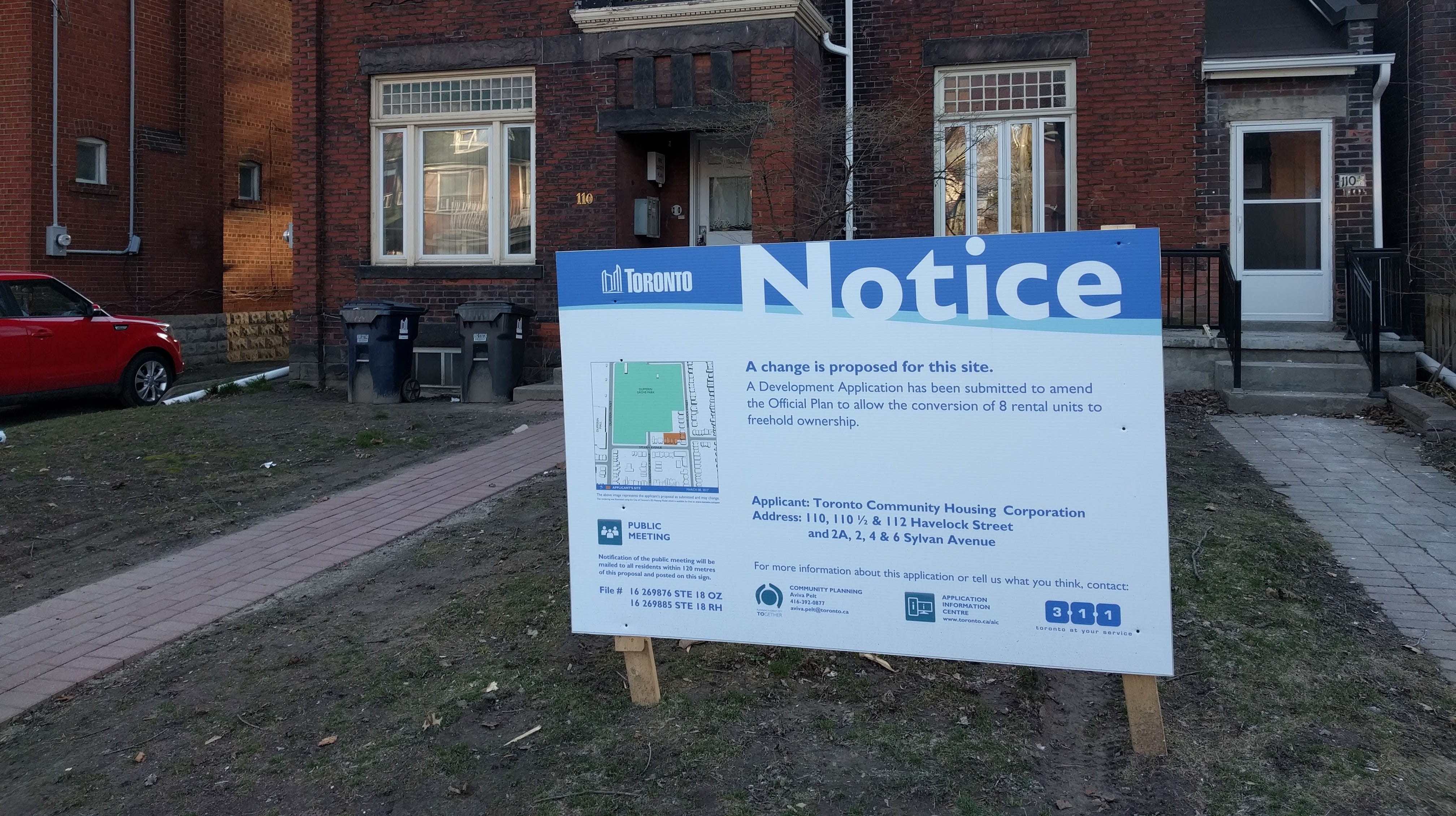
It might be the most basic interaction that the average person has with Ontario’s planning system. You leave your door and head out for a walk to the coffeeshop around the corner. Just after taking your first sip to get the level of the coffee down enough for you to confidently put the lid on, you turn to walk out the door and looking up at the empty storefront across the street you see it, that sign: NOTICE A Change is proposed for this site. The development application sign. Another condo? Another tower? When will THEY stop all the condos in the city? But what does it mean and how can you get involved more meaningfully in the process?
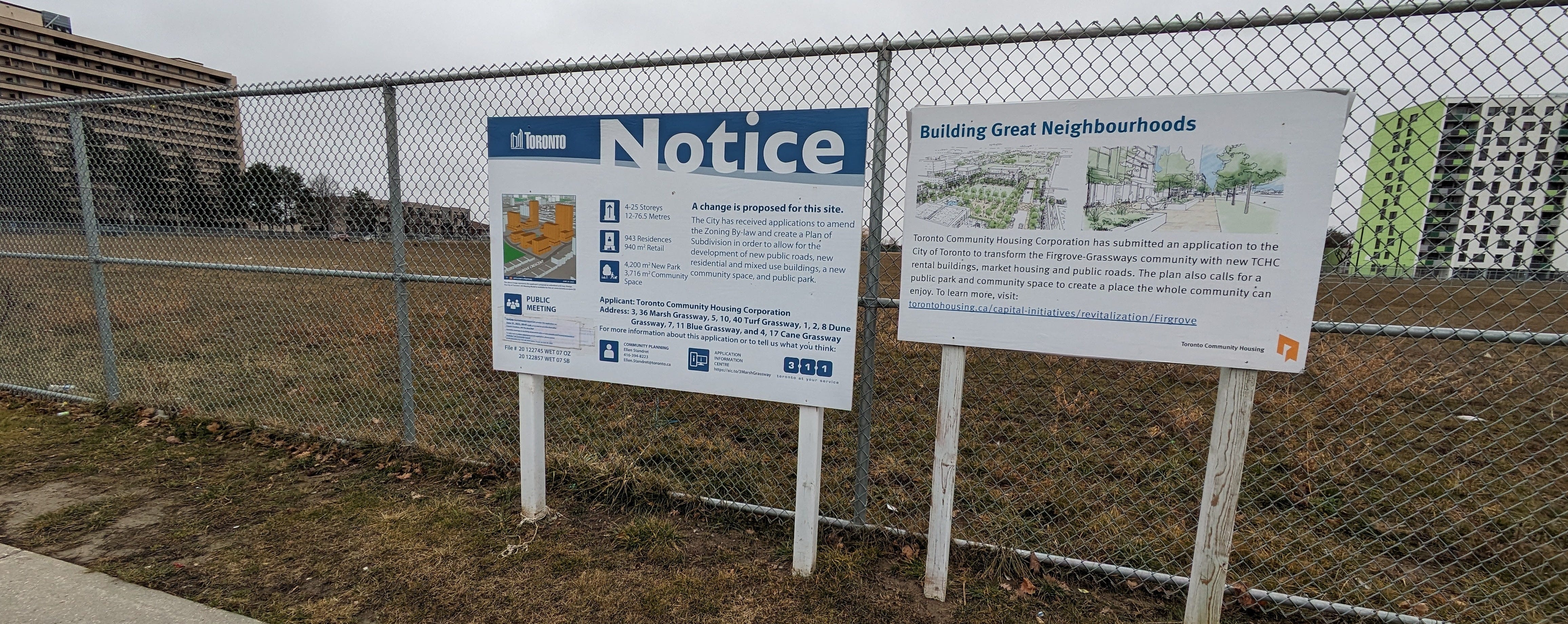
Why You Are Seeing the Sign
First, the development application sign is not going to appear before every big project in the City. Sometimes, construction can begin without this kind of public notice. That’s because the proposed building already fits within the existing Zoning By-law and other planning permissions for the site.
A sign appears only when a property owner is asking to change the rules for their land or when the City has proposed a change for a specific area. For example, this may include building taller, adding new uses, or adjusting parking and setback requirements.
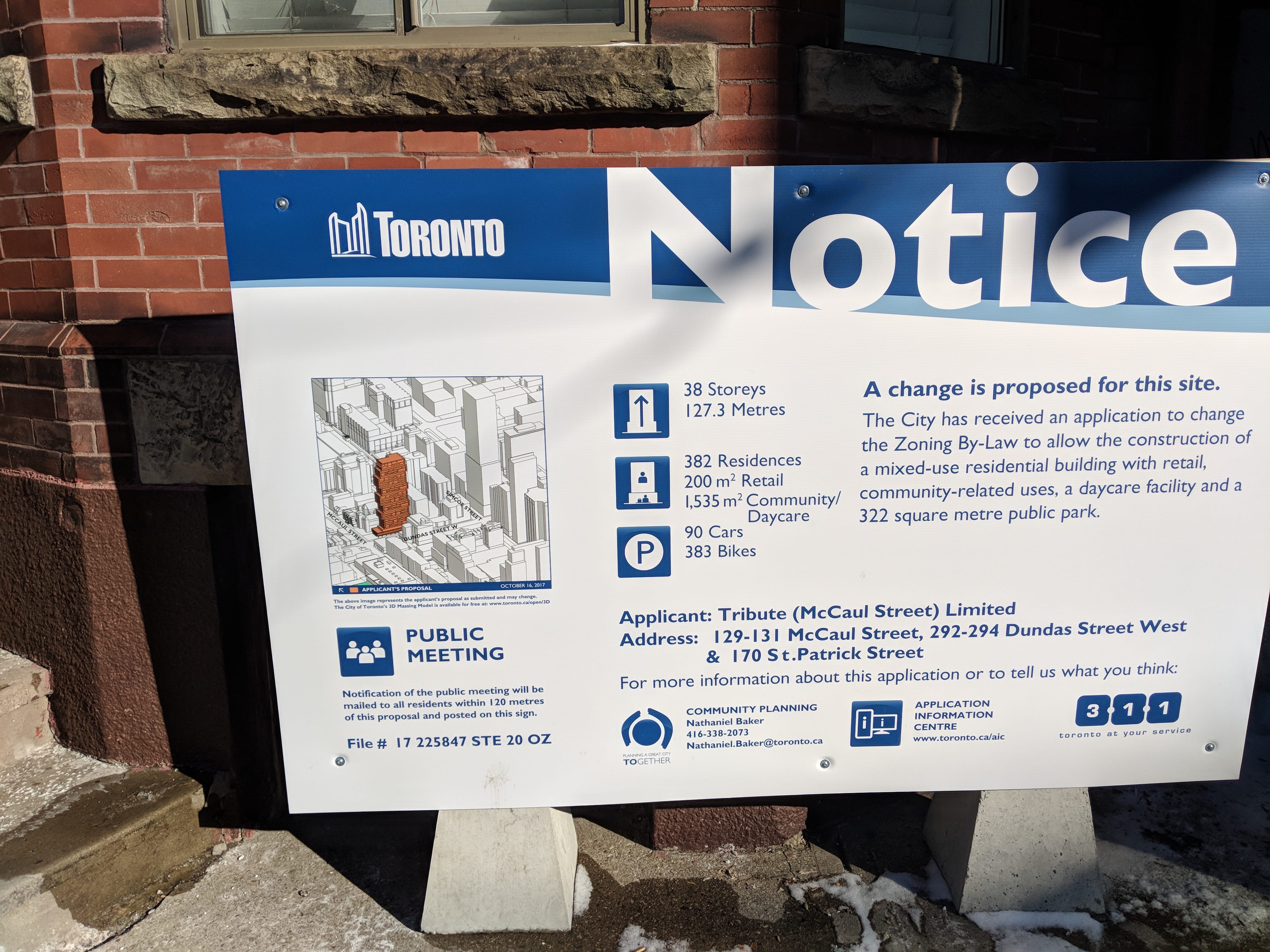
The Planning Act requires a public process for several types of applications, including:
Official Plan Amendment (OPA)
Zoning By-law Amendment (ZBA)
Draft Plan of Subdivision Approval or Draft Plan of Condominium Approval
Minor Variance or Consent (Note: these latter applications are handled by a Committee of Adjustment - a slightly different process that I will explore in another article)
Essentially, that sign is your first indication that a property owner has formally asked the City to change the planning rules for their specific piece of land and that the City has started their review and will also be seeking public input.
The Rules of the Game: The Planning Hierarchy
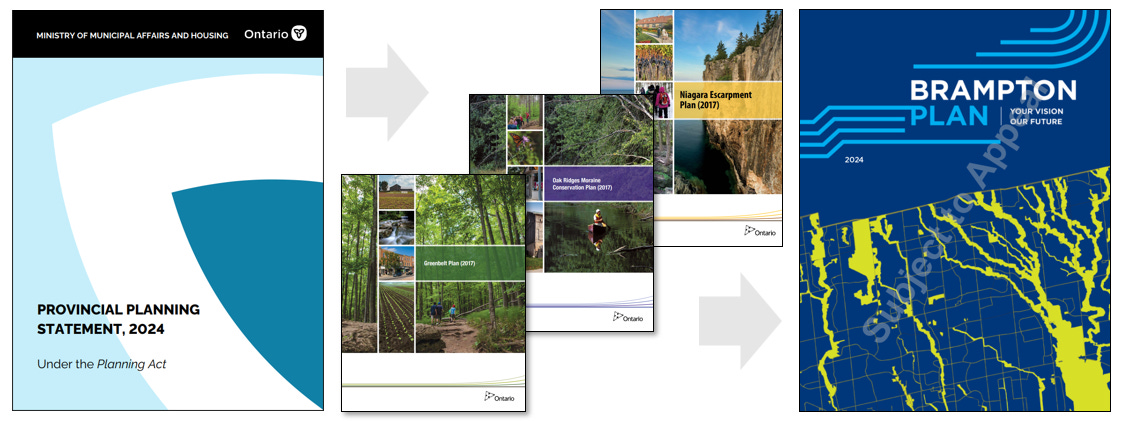
So, on what basis can a change be justified? It’s not arbitrary. Every planning decision in Ontario is measured against an hierarchy of documents. From the Provincial Planning Statement, down to Provincial Area Plans, Single/Upper-tier Official Plans, Lower-tier Official Plans, Secondary Plans, and finally to local Zoning By-laws. To be approved, an application must conform to the policies of the preceding document in that hierarchy. All applications must also be consistent with the Provincial Policy Statement, and any decision must fall within the powers set out under the Planning Act and follow all other applicable laws.
The Planning Act: The Planning Act is the legal foundation of Ontario’s land use planning system. This provincial law sets out all the fundamental rules, roles, and responsibilities for how land in the province can be developed and managed. It defines the specific authority of everyone involved in the process: the province and its ministers, municipalities, planners, and applicants. Crucially, the Act dictates the processes for all types of development applications, detailing what can be changed, how decisions must be made, who must be consulted, and when that consultation must happen. It also establishes the basis for appeals, outlining the route to the Ontario Land Tribunal for parties who disagree with a council’s decision.
The Provincial Planning Statement (PPS): This document sets the Province’s priorities for growth and development. It provides direction on key issues to ensure the public interest is protected. The PPS establishes the goals and principles of the planning system that local municipalities must implement and not contradict when creating their own plans and in all of their decisions.
Provincial Plans: In addition to the PPS, the province implements specific plans for certain geographies with unique ecological or land use features. These plans provide a more detailed layer of policy. These plans include the Greenbelt Plan, the Oak Ridges Moraine Conservation Plan, and the Niagara Escarpment Plan, which all contain specific rules to protect sensitive environmental areas and manage growth, resource extraction and site alteration.
Municipal and Regional Official Plans: All municipalities in Ontario are required to develop an Official Plan. Upper-tier municipal official plans (e.g., a Region or County) govern high-level policy and set a framework for local municipalities to adhere to in their own municipal plans, which can provide additional detail or specific approaches. Single-tier municipalities like Toronto do not have an upper-tier plan and their Official Plans apply across the city. These plans represent a city’s high-level vision for managing growth, setting out broad policies on where housing, offices, parks, and industry should go, coordinating transportation, transit, and land use planning, and setting goals for infrastructure coordination, all while interpreting provincial policies for the local context.
Zoning By-law: This is the most detailed set of rules. A Zoning By-law puts the Official Plan into practice with legally-enforceable regulations for every property, dictating things like building height, setbacks, and permitted uses.
When a developer proposes a change, they must provide supporting information, including various reports and studies required by the Planning Act. These proposals are typically summarized and justified by professional urban planners through the preparation of a “Planning Rationale” report. This key document details how the proposal conforms to the entire policy hierarchy and provides a detailed justification for why the requested change represents good planning.
What Happens After the Sign Goes Up?
Seeing the sign doesn’t mean the project is approved. In fact, it’s the very beginning of a long and detailed public process. Here’s a simplified look at the journey:
Application Submitted: A developer submits a formal application to the City, including numerous studies on things like traffic impact, shadows, wind, and servicing capacity.
City Review (Circulation): The City’s planning department sends the application to various internal departments and external agencies for their expert comments. The local Councillor is also formally notified.
Public Notification: This is where the sign comes in. The sign is posted, notices are often mailed to nearby residents, and the application details are posted on the city’s website.
Community Consultation Meeting: The City Planner and the local Councillor’s office will host a public meeting for residents to see the proposal, ask questions, and provide direct feedback.
Revisions and Refinements: Based on feedback, the developer will almost always revise their proposal.
Staff Report and Recommendation: The City Planner writes a comprehensive report with a recommendation to City Council.
Decision by Council: The application goes to a committee of City Council and then to a full Council meeting for a final decision.
How You Can Get Involved More Meaningfully
Your voice matters. Local residents provide a perspective that planners and developers don’t have. Here’s how you can participate effectively.
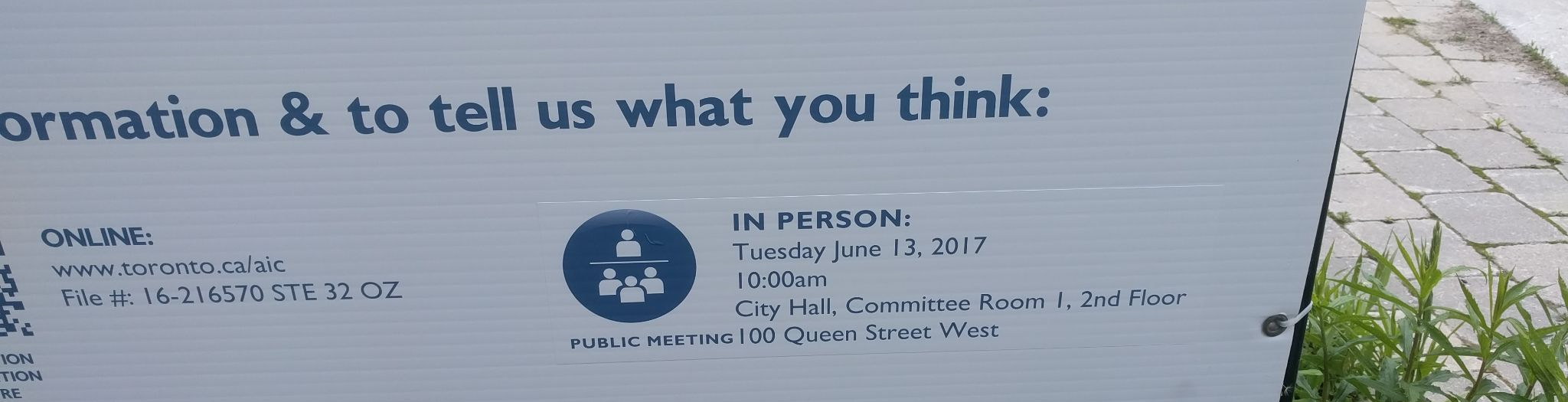
Step 1: Learn More About the Application
Use the Sign: The sign has the application number and contact information for the City Planner.
Visit the City’s Website: Use the application number to look up all the submitted documents on the City’s development portal. In Toronto, this is the Application Information Centre (AIC). Where municipalities make these documents retrievable online, this is the public window into the planning process: you can read the submitted plans and technical reports for yourself. Not all of these documents are equal, however, and in another article, I will quickly explain how to read documents to understand what is proposed.
Talk to the Planner: The City Planner is your best resource. Their job is to manage the application and consider all viewpoints. Email or call them with your questions.
Attend the Public Meeting: This is your best chance to hear directly from the developer and ask questions.

Step 2: Make Your Voice Heard
Contact the City Planner: Send your written comments, questions, and concerns to the City Planner. This feedback becomes part of the public record.
Talk to Your Neighbours: Speaking with your neighbours can amplify your voice in the process. Discuss the proposal with them; community groups or residents’ associations often have a strong voice in the process.
Contact your Local Councillor: You can let your local Councillor know what you think about the proposal. While the Planner assesses the application from a technical and policy perspective, your Councillor is your political representative. They can advocate for constituents, address community concerns, and work to leverage a development to deliver or coordinate local objectives, such as increasing publicly accessible open space or negotiating new amenities.
Attend the Community Consultation Meeting: As required by the Planning Act, the application on the sign will require a community open house meeting. Once the meeting is scheduled, the sign will be updated with the date and time of the upcoming consultation meeting; these can be in person or online. You will also get a notice in the mail if you live close to the site that is the subject of the application, and you can check online for a list of all upcoming consultation meetings in Toronto.
Submit Written Comments to Committee: Once the review is complete, City staff will write a recommendation or a refusal report and the application will be scheduled for Community Council or Planning and Housing Committee. You can submit formal written comments to the City Clerk to be included in the official agenda for the council committee meeting where the decision will be made.
Speak at Committee: You can register to “make a deputation,” which gives you a few minutes to speak directly to the councillors before they vote.
Final Thoughts: Being an Effective Partner in City Building
That sign on the street is an invitation to a conversation about how your neighbourhood will grow and change. To participate effectively, it helps to keep a few things in mind. The sign is there because a change is being proposed; an existing policy and By-law already apply to the site. It is important to understand what the current permissions are and then what is being proposed. You can learn this by attending the community meeting, talking to the City Planner, or reading the applicant’s Planning Rationale report on the city’s website. When a staff report with a recommendation is eventually provided to council, it will also detail the planning issues and how they have been addressed.
It’s also worth remembering that the sign is not there to invite the community to exercise a ‘veto’ power. Council is bound by the Planning Act and the planning policy framework to execute provincial policies that call for growth and intensification and decisions that don’t follow those rules are easily overturned at the Ontario Land Tribunal. It is rare for an applicant to go through the effort and expense of submitting a planning application that is entirely without merit. It is also important to be realistic about expectations. The public process is not an opportunity to simply say “no.” Objections that a building is too tall, has too many units, or provides not enough parking are unlikely to make the proposal disappear. Instead, there are often strategies and responses available to manage each of these issues. The role of the City Planner and of Council is to find a way to balance community concerns with opportunities for new development. This means the process is a negotiation, and it works best when you are prepared to collaborate. By accurately representing your concerns and desires, such as a lack of parking, a need for affordable housing, a desire for smaller storefronts, or an opportunity for a new community garden, you can help shape the outcome. The planning system is most successful when municipalities, developers, and the community all act as partners in the city building process.
This is the first post in Reading the City. I am writing this series to explain how planning works in Ontario and to help residents, organizers, and community builders engage with the development process. If you know someone who would benefit, please share it. To follow all that’s to come in this series and my other writing about planning, housing and neighbourhoods, subscribe to CitySteps.